How pedal sensors, motor placement, throttles and brakes behave under real hands and knees, and what a careful buyer checks before signing anything.
Two bikes on the same showroom floor can have identical motor wattage, identical battery capacity and identical marketing copy, and still behave so differently on the first pedal stroke that one of them is unrideable for a person with a stiff knee or a slow recovery from a wobble. The difference is rarely the motor. It is how the bike decides when to help you, how quickly it commits to that decision, and how fast it lets go when you stop pedaling or grab a brake lever. Those three things are worth more attention than any spec sheet number.
Cadence sensors lunge, torque sensors follow
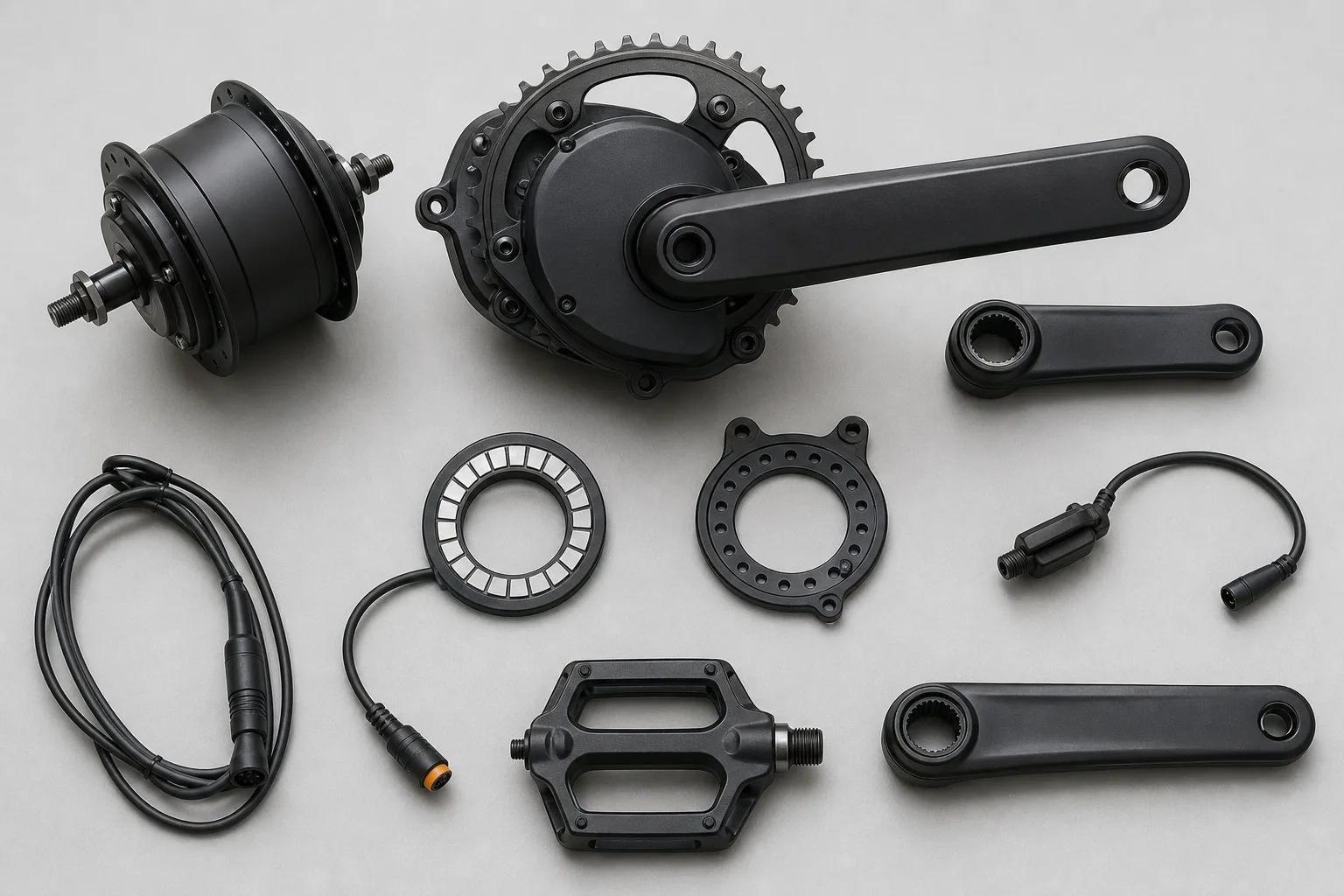
A cadence sensor is a simple counter: it watches a ring of magnets on the crank, sees the pedals turning, and switches the motor on at whatever assist level you selected. It does not care how hard you are pushing. Turn the crank an inch while standing over the frame at a crosswalk and the bike will go, sometimes with real force, before your second foot is anywhere near a pedal. Riders describe it as a lunge or a shove. A torque sensor measures the actual pressure you put into the pedals and scales the motor to match, so the help arrives in proportion, builds gradually, and stops the instant you soften your effort.
For someone whose limiting factor is balance rather than fitness, that distinction decides the purchase. A cadence bike rewards a rider who can absorb a sudden push with strong arms and a quick correction. A torque bike suits a rider who needs the machine to stay predictable during a slow start on a driveway apron, a tight turn out of a garage, or a stop-and-go stretch of sidewalk ramp. Torque sensing costs more and is worth asking about by name, because catalog listings often bury it or omit it entirely.
Hub motor or mid-drive, and where the weight sits
A hub motor lives inside the wheel, usually the rear, and pushes the bike along independently of the chain. It is quiet, mechanically simple, and cheap to build, but it concentrates several pounds at the wheel and it cannot use the gears, so a steep hill is handled with brute current rather than a lower ratio. A mid-drive sits at the crank and turns the same chain you turn, which means your gears multiply the motor's effort and the mass sits low and centered, right where a heavy bike is easiest to hold upright at a standstill. Mid-drives also chew through chains and cassettes faster.
The practical test is not a hill. It is walking the bike. Roll each candidate across a parking lot by hand, tip it five degrees off vertical, and see which one you can catch. That single check reveals more about daily livability than any acceleration run, because most falls happen at walking pace, near a curb, with one foot down.
A throttle is a rescue or a hazard, depending on your grip
A throttle moves the bike without pedaling, and for a rider with an arthritic knee, a fused ankle, or a hip that objects to the first quarter turn, it is the difference between starting from a stop with confidence and not starting at all. It also demands a wrist that can hold a steady position and a hand that will release cleanly under stress. Thumb throttles ask less of the wrist than twist throttles and are harder to trigger by accident when you clench during a surprise. Try both, deliberately, while pretending to be startled.
Every assist system should also have a brake cutoff, a small switch in each brake lever that kills motor power the moment you begin to squeeze. On a cadence bike this matters enormously, because the motor otherwise keeps pushing while you are trying to stop. Squeeze each lever a millimeter and confirm the power dies before the pads bite. The Consumer Product Safety Commission oversees bicycle and electric bicycle equipment requirements in the United States, and reputable sellers will answer questions about cutoffs and braking without hedging.
Brakes, because the bike weighs what it weighs
A sixty-pound bike with a rider on it does not stop like the ten-speed you remember. Hydraulic disc brakes take far less hand force than mechanical discs or rim brakes, which is the whole argument for a rider with reduced grip strength: the same stop, with a fraction of the squeeze, repeated down a long descent without the fade that tires a hand out. Look for four-piston calipers and larger rotors on heavier models, check that the levers have reach adjustment so short fingers get real leverage, and brake hard once in an empty lot so you learn the actual distance.
Bring the checks with you and run them in order: sensor type, walking balance, throttle release, cutoff, lever force. A shop that lets you take the time is telling you something useful about the years of service ahead.